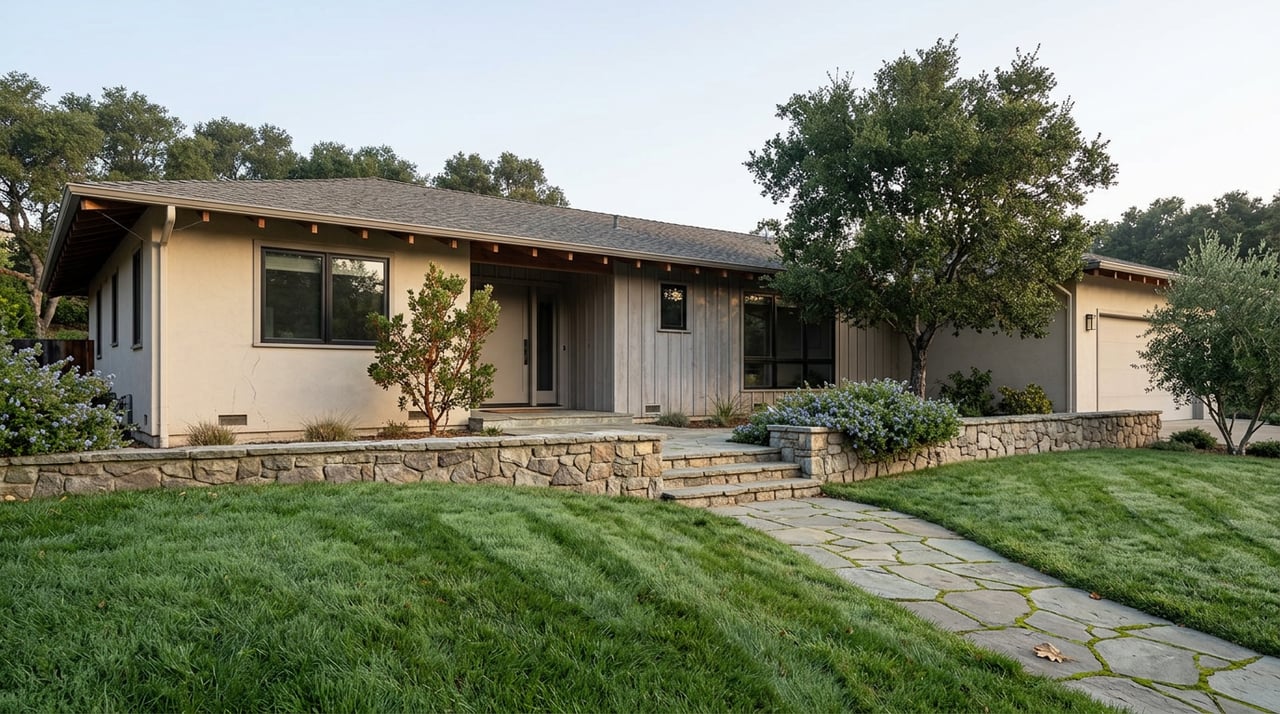
Saratoga Homes Average 14 Days on Market. Probate Sales Can Take Longer.
September 3, 2026
September 3, 2026
Saratoga homes sold in an average of 14 days as of August 2026, with a sale-to-list ratio of 102.2 percent and only 55 active listings on the market at any given time. If you are settling a parent's or relative's estate and you have heard that statistic, it probably sounds like good news. It is, but not in the way most people assume.
The market's speed is real. It is also almost beside the point for the first several months of a probate sale in Saratoga. The variable that actually determines how fast your house moves, and whether a stranger can legally outbid your accepted offer in open court, was decided months earlier by a single document: the Letters Testamentary or Letters of Administration issued by the Santa Clara County Superior Court. What that document grants the executor or administrator, not what the Saratoga market is doing that week, sets the real timeline.
Every California probate estate is placed on one of two tracks under the Independent Administration of Estates Act, and the track is set early, often before anyone has thought seriously about listing the house.
With full IAEA authority, the personal representative can list the property, negotiate offers, and accept terms much like any other seller. Before closing, they serve a Notice of Proposed Action on all beneficiaries and anyone who has requested special notice. Recipients get 15 days to object. If nobody does, the sale proceeds without ever appearing before a judge. On a Saratoga listing, that means the house can move at close to the market's normal 14-day pace, plus that 15-day notice window layered on top.
With limited authority, the accepted offer is not the end of the negotiation. It becomes the opening bid at a court confirmation hearing, where any qualified buyer who shows up can outbid it. Inherited Property Match explains that the court sets a minimum first overbid, generally the accepted price plus 10 percent of the first $10,000 and 5 percent of the balance. A Saratoga home that clears at $4.2 million after a clean private negotiation can still be reopened in a courtroom to a bidder your seller has never met.
The document that decides which of these two sales you are running is issued long before the for-sale sign goes up. Ask for a copy of the Letters and check Item 3 (or Item 4 on the Order for Probate). That line is what tells you whether Saratoga's 14-day market applies to your house or whether it is about to become a courtroom auction.
The Letters Testamentary or Letters of Administration are issued at the initial probate hearing, and in Santa Clara County that hearing is typically calendared within 30 to 45 days of filing the petition, according to the court's own probate calendar. Item 3 on the Letters (Item 4 on the Order for Probate) spells out exactly what authority the judge granted. It is worth reading closely, because the difference between full and limited authority is not cosmetic.
| Full IAEA Authority | Limited Authority | |
|---|---|---|
| Court hearing required to sell | No, once NOPA period passes | Yes, confirmation hearing |
| Notice period | 15 days to beneficiaries and anyone who has requested special notice | Same, plus hearing scheduling |
| Overbid risk | None | Yes, court sets minimum overbid |
| Sale price floor | Negotiated, no statutory minimum | A sale price floor applies |
| Timeline once listed | Close to normal market pace | Weeks to months longer, hearing-dependent |
If the estate's attorney has not already confirmed which track applies, that is the first call to make, not the second or third.
A personal representative is generally exempt from filling out California's standard Transfer Disclosure Statement, because they usually never lived in the home and have no personal knowledge of its condition. That exemption gets misunderstood constantly. It does not mean no disclosures at all.
California Civil Code Section 1102.2 still requires a reasonably competent visual inspection, and any known material facts about the property's condition still have to be disclosed, typically on an Exempt Seller Disclosure form rather than the standard TDS. If there are old inspection reports, repair invoices, or a known roof leak, those get disclosed regardless of whether the representative ever occupied the house.
Separately, Civil Code Section 1710.2 requires disclosure if someone died on the property within the last three years, regardless of cause, and this obligation applies even in probate sales. It is easy to assume a probate exemption covers everything about the property's history. It covers less than most executors expect.
California Probate Code Section 10810 sets statutory compensation for both the attorney and the personal representative on a graduated scale of the estate's gross value: 4 percent of the first $100,000, 3 percent of the next $100,000, 2 percent of the next $800,000, 1 percent of the next $9 million, and 0.5 percent of the next $15 million. Each side, attorney and representative, is entitled to that same fee independently.
Run that formula against a Saratoga-priced estate near the current $3.998 million median from August 2026, assuming the home is the estate's primary asset. The math works out to roughly $53,000 in statutory fees on the attorney's side and a matching $53,000 for the personal representative, close to $106,000 combined before court costs, the probate referee's fee, or any extraordinary fees for a contested or complicated sale. That number is not a Silicon Valley-wide average. It is a direct consequence of Saratoga's own median home price feeding into a statewide formula that scales with the size of the estate.
The filing itself happens at the Downtown Superior Courthouse, 191 North First Street in San Jose, where Santa Clara County's Probate Division hears estate, trust, and conservatorship matters. Santa Clara County recorded 1,802 estate and trust probate filings in fiscal year 2024 to 2025, the sixth-highest count of any California county, so the courthouse handling your family's case is handling roughly five estates a day countywide.
Saratoga's inventory skews toward long-held family homes. About one-third of the city's housing stock was built in the 1960s, and homeowner occupancy sits at 86 percent, well above the pattern in newer or more transient submarkets. Above $4 million, that inventory shifts toward Pierce Road hillside estates and larger parcels closer to the Saratoga foothills, properties that often carry acreage, orchards, or vineyards and have frequently stayed in one family for decades near the Hakone Estate and Gardens or within reach of the Montalvo Arts Center.
Homes that stay in a family for that long are, by definition, more likely to change hands through inheritance rather than a straightforward listing. That is part of why probate and trust sales come up more often in Saratoga conversations than in newer developments nearby, and why the authority question on the Letters matters as much here as the school district or the lot size.
Does Saratoga's fast market actually help a probate sale? Only if the estate has full IAEA authority. Under limited authority, a strong offer does not end the negotiation. It becomes the floor for a confirmation hearing where outside bidders can still appear.
Can a stranger really outbid an accepted offer? Yes, if the sale requires court confirmation. The court sets a minimum overbid, and any qualified buyer can show up and bid at the hearing.
If the house sells as-is, do pre-inspections still matter? Yes. The TDS exemption removes one form, not the underlying duty to disclose known defects, and a buyer's own inspection contingency still depends on what condition information is available going in.
Selling an inherited home is rarely just a real estate transaction. It is a legal process with a real estate transaction nested somewhere inside it, and the two run on different clocks until the Letters say otherwise. Nisha Sharma holds SRES and probate and trust certifications specifically for families navigating this overlap in Los Altos, Saratoga, and the surrounding Peninsula communities. Request a private consultation and home valuation before you list, so the authority question gets answered before the for-sale sign goes up, not after.
This article is general information, not legal, tax or financial advice. Consult a qualified professional about your situation.
Whether you are buying or selling a home. I'm here to help.
Get In Touch With Nisha To Learn More
Nisha Sharma
[email protected]
(650) 492-9263
CA DRE# 01746077
161 S. San Antonio Rd. Los Altos, CA 94022