Sunnyvale Ranch vs New Construction: How to Choose
May 7, 2026
May 7, 2026
Trying to choose between a classic Sunnyvale ranch home and new construction? In a market where owner-occupied homes have a median value of $1,801,800 and housing options can move quickly, that decision can shape your daily life and your long-term costs. If you are weighing charm, lot potential, upkeep, energy performance, and commute patterns, you are asking the right questions. This guide will help you compare both options in a practical Sunnyvale context so you can move forward with more confidence. Let’s dive in.
Sunnyvale is a high-demand Silicon Valley market with 61,272 housing units counted in 2020, and about 95% of those units were occupied. The city’s housing profile also shows a large share of homes were built between 1960 and 1979. That matters because many buyers are not choosing between two similar homes. They are often comparing an older home with history and renovation potential against a newer home built to current standards.
Sunnyvale’s housing element notes that homes older than 30 years are more likely to need roofing, foundation, and plumbing work. At the same time, the city also notes that many older homes have already been remodeled, expanded, rebuilt, or renovated. In other words, an older ranch in Sunnyvale may be either a project, a partial update, or a polished turnkey home, depending on the property.
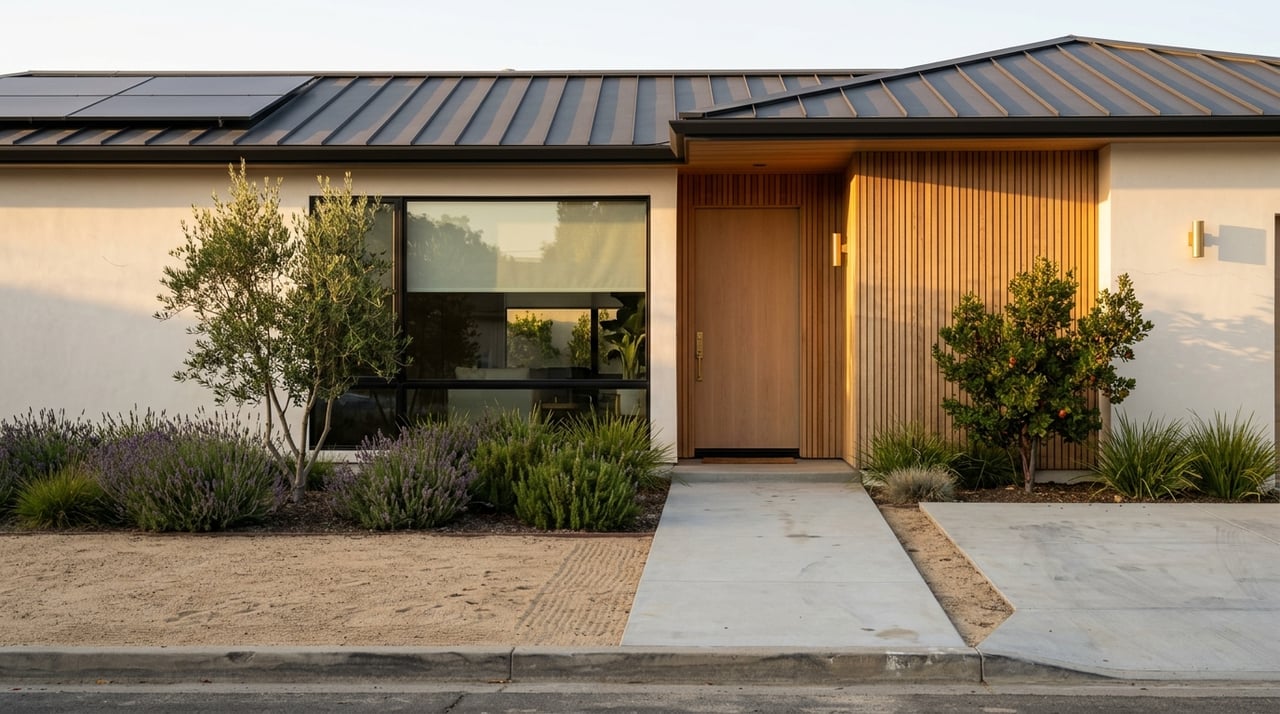
A ranch home is typically a one-level home with a low roof and an open plan. That basic layout still appeals to many buyers because it often creates easier circulation, fewer stairs, and a stronger indoor-outdoor connection. If you want day-to-day simplicity, that single-level design can feel very practical.
In Sunnyvale, ranch homes are also tied to the city’s mid-century housing stock. Many sit on lots where outdoor space, setback patterns, and future flexibility become part of the value equation. For some buyers, the home itself is only part of the appeal. The lot and what you may be able to do with it later can matter just as much.
A Sunnyvale ranch may be a strong fit if you value:
The city’s permit resources for single-family homes, ADUs, major remodels, and new construction show that remodeling is a familiar path in Sunnyvale. That does not mean every property can be changed in the same way, but it does confirm that updates and expansions are a normal part of the local housing landscape.
The biggest tradeoff is usually condition. Because much of Sunnyvale’s housing stock dates to the 1960s and 1970s, some ranch homes may need meaningful updates even if they look appealing on the surface. Roofing, plumbing, and foundation-related work are among the issues the city specifically flags as more common in older homes.
That does not mean you should avoid older homes. It means you should compare them with a realistic ownership budget. A ranch can be an excellent choice if you want to personalize a home over time, but it helps to leave room for repairs, upgrades, or both.
New construction in Sunnyvale tends to appeal to buyers who want efficiency, newer systems, and fewer immediate projects. The city’s building and fire code information points to the 2025 California Residential Code, the 2025 California Green Building Standards Code, and the 2025 California Energy Code. For permits applied for on or after January 1, 2026, the California Energy Code requires compliance with updated standards that expand heat pumps in newly constructed residential buildings, encourage electric-readiness, strengthen ventilation standards, and require solar PV for newly constructed single-family homes with limited exceptions.
For you as a buyer, that often translates into a home that starts with more current energy performance and modern building systems. Sunnyvale’s Green Building Program also states that CalGreen mandatory measures apply to all new construction, and that the local program covers new development and remodeled buildings while exceeding state mandates. That can be a meaningful advantage if lower near-term maintenance and a more energy-conscious home are high priorities.
A newer home may be the better choice if you want:
For busy professionals and relocating buyers, that convenience can be especially attractive. If your goal is to move in and focus on work and life rather than projects, newer construction may feel like the simpler path.
The tradeoff is often flexibility. With a newer home, the layout, systems, and design choices are usually already established. While any home may be changed later depending on zoning and permits, buyers often choose new construction because it is already finished rather than because it invites major reconfiguration.
There is also an important local context in Sunnyvale. Some newer housing comes from infill or redevelopment rather than from large new subdivisions. That means the setting, lot size, and neighborhood pattern may vary more than buyers expect when they hear the phrase “new construction.”
In Sunnyvale, lot size is not a minor detail. The city’s single-family zoning summary shows minimum lot areas ranging from 2,600 to 4,000 square feet in R-1.7/PD up to 8,000 square feet in R-1 and R-2, with R-0 at 6,000 square feet and R-1.5 at 4,200 square feet. That range helps explain why one ranch home may offer very different future options than another.
If you are comparing homes, look beyond square footage and finishes. The specific parcel and zoning district can influence what may be realistic for additions, backyard planning, ADUs, or future reconfiguration. A ranch home with a favorable lot may offer long-term potential that does not show up in the photos.
Before you decide, consider:
These questions matter because two similar-looking ranch homes can offer very different paths over time.
In Sunnyvale, commute and employer proximity can shape the right choice as much as the home itself. The city’s Community and Business Profiles page lists major employers including Google, Apple, Amazon, Intuitive Surgical, Lockheed Martin, Meta/Facebook, Synopsys, Applied Materials, Fortinet, LinkedIn, and Juniper. That concentration means your ideal home may depend on which campus, corridor, or daily routine matters most.
If you want a more established residential setting and are comfortable planning upgrades over time, a ranch may align better with your goals. If you need a streamlined move and want newer systems from day one, new construction may be more appealing. In both cases, the best answer is often tied to how you actually live each week.
If you are stuck between the two, focus on your top priority. For many buyers, the choice becomes clearer when they decide whether they care more about renovation latitude and lot potential or efficiency and turnkey convenience.
In Sunnyvale, this is rarely a simple old-versus-new debate. It is more often a choice between character, lot flexibility, and future customization on one side, and efficiency, newer systems, and convenience on the other. The right answer depends on your budget, your tolerance for projects, and the way you want your home to support your life.
If you want help comparing specific Sunnyvale properties through that lens, working with an advisor who understands both the housing stock and the local development framework can make the process much clearer. For a private consultation on Sunnyvale homes, reach out to Nisha Sharma.
Whether you are buying or selling a home. I'm here to help.
Get In Touch With Nisha To Learn More
Nisha Sharma
[email protected]
(650) 492-9263
CA DRE# 01746077
161 S. San Antonio Rd. Los Altos, CA 94022