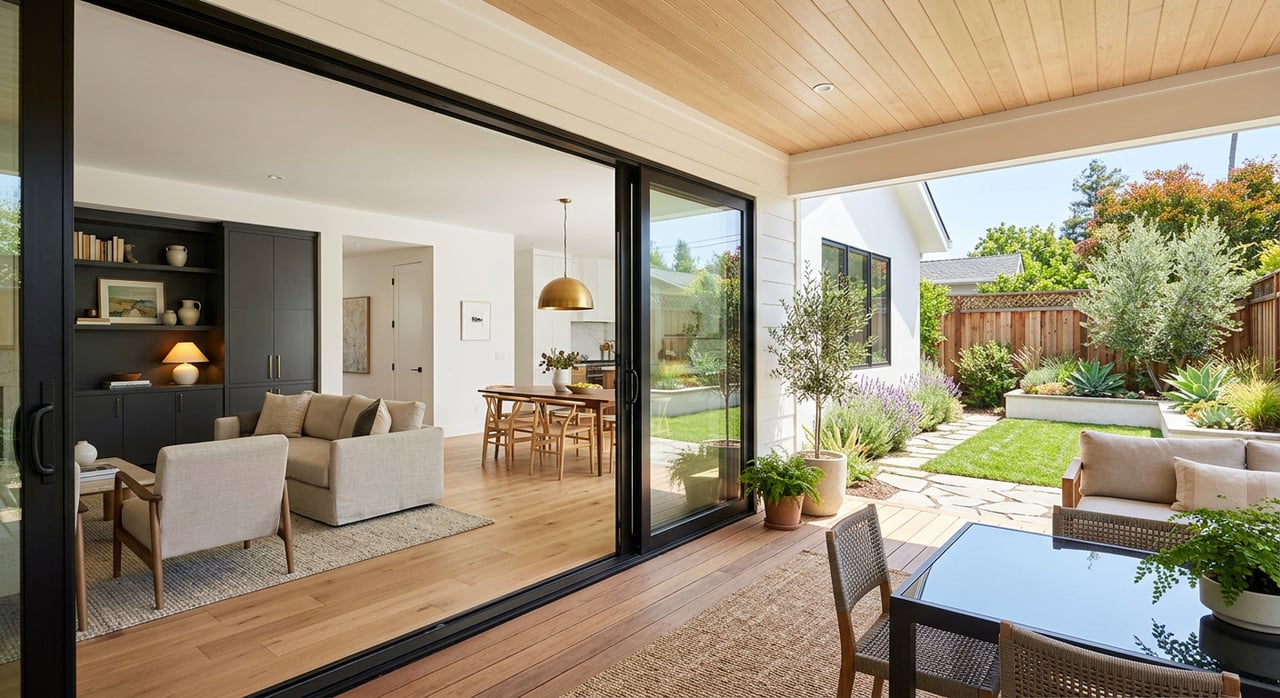
You bought smart, built equity, and now you’re craving more space, a yard, and a quieter street. Moving up from a Mountain View condo to a single-family home can feel like a leap, especially with tight inventory and timing to juggle. This guide gives you a clear plan: current 2026 market context, neighborhood options, offer strategies, financing tools, taxes, and a simple step-by-step. Let’s dive in.
Mountain View market at a glance (Jan 2026)
Mountain View’s median sale price across all home types was about $1.66M in January 2026, according to Redfin. Zillow’s home value index shows a different level near $1.97M for the city. These indexes use different methods and time windows, so treat them as directional benchmarks, not exact comps.
Desirable single-family homes have been moving in roughly 30 to 40 days lately, and multiple offers are not uncommon. Regionally, Bay Area single-family supply has hovered near or below about 2 months in many submarkets, which supports a seller-leaning environment for houses. You can read more regional context in this analysis of the Bay Area’s 2026 reset and why local buyers remain active despite national headlines in the Bay Area market writeup.
What this means for you: condos often have a bit more supply than single-family homes, so expect your purchase to be the tighter leg of your move-up.
Where move-up buyers look
Mountain View neighborhoods to know
- Old Mountain View. Walkable to Castro Street and Caltrain/VTA. Smaller lots and strong price per square foot. Great if you want dining and transit nearby.
- Moffett-Whisman and North Whisman. More condo and townhome stock with relatively accessible pricing compared with Old Mountain View.
- Monta Loma, Cuesta Park, and Waverly Park. Classic single-family areas with larger lots. Waverly Park often includes bigger homes.
Your priorities might include lot size, a home office, yard space, commute patterns, and school district assignment. For school attendance boundaries and programs, review the official Mountain View Whisman School District updates on the MVWSD site.
Nearby city alternatives
Many move-up buyers expand their search to Sunnyvale, Los Altos, Palo Alto, Cupertino, parts of West San Jose, and sometimes Saratoga or Campbell. Median single-family prices vary widely across these cities, so budget and district preferences often guide the final choice.
Timing your move: three workable paths
Sell first, then buy
- Pros: You know your sale proceeds, avoid two mortgages, and present a clean financial picture for your next purchase.
- Cons: You may need short-term housing or a rent-back from your condo buyer while you shop. You can miss out on homes if you do not move quickly.
- Timing: Financed purchases in Santa Clara County typically close in about 30 to 45 days. All-cash purchases can close faster, often in 7 to 21 days.
Best for: You value certainty, want to minimize risk, and can handle a short rental or storage gap if needed.
Buy first, then sell
If you want to write a stronger, non-contingent offer, these tools can help unlock your equity before your condo sells:
- Bridge loan. A short-term, interest-only loan that taps your equity so you can buy before selling. Expect higher rates and fees than a long-term mortgage and plan for a 6 to 12 month timeline. Learn the basics and current cost drivers in this overview of bridge loan rates and mechanics.
- HELOC or home-equity loan. Use a line of credit on your condo for the down payment on your next home. HELOCs often have variable rates and draw periods. Review consumer protections and key risks in the CFPB’s HELOC booklet.
- Cash-out refinance. Replace your current mortgage with a larger one to extract equity. This can take similar time to a regular refinance and may offer a lower rate than a bridge loan if you can wait.
- Portfolio or private lenders. These can move faster and structure unique terms, but usually at a higher cost.
Best for: You need to compete right now, have strong income and reserves, and are comfortable carrying both homes for a short period.
Make a contingent offer or use rent-back
- Sale contingency. You write an offer on the new home that depends on your condo selling. This is less attractive in competitive settings. Sellers may use a kick-out clause that gives you a deadline to remove the contingency if another buyer appears.
- Rent-back. After you sell, you stay in place for a set period while you close on your next purchase. Thirty to sixty days is common in many markets, but every term is negotiated. A simple occupancy agreement should cover rent, utilities, liability, condition at move-out, and dates, and escrow or title should hold the signed document.
Best for: You want to keep risk low but still try for a preferred home. Your agent can advise which homes might accept a contingency or a rent-back.
Numbers to model before you list
Loan type and limits
The 2026 baseline conforming loan limit is $832,750. Many Mountain View move-ups will exceed this, which means jumbo underwriting and possibly a larger down payment. See the announcement and practical implications in this loan limit update.
Carrying two homes: a quick example
Say you buy a $2,000,000 home with 20 percent down while you still own your condo. You might carry:
- New mortgage principal and interest.
- Property taxes around 1 to 1.25 percent of purchase price per year, paid in installments.
- Home insurance and utilities.
- Existing condo mortgage and HOA dues.
- Interest-only payments on a bridge or HELOC if used.
For planning, build a 3-month cushion for worst-case overlap and ask your lender to model total monthly costs at conservative rates. Err on the high side.
Seller closing costs and transfer taxes
Typical seller costs include agent commissions, title insurance, escrow fees, recording fees, and city/county transfer taxes. Use a title company checklist, like this California buyer and seller handbook, to map your exact line items.
In Mountain View, transfer taxes include the Santa Clara County documentary tax plus a city conveyance tax. County is $0.55 per $500 of consideration (that is $1.10 per $1,000). The City of Mountain View adds $1.65 per $500 (that is $3.30 per $1,000). Together, that is $4.40 per $1,000. On a $1.5M sale, that is roughly $6,600. On a $2.2M sale, it is about $9,680. Confirm rules with the County Clerk-Recorder’s office using their official fee schedule.
Taxes on your sale
If your condo has been your primary residence, you may be able to exclude up to $250,000 of gain if single, or up to $500,000 if married filing jointly, if you meet the 2-out-of-5-year ownership and use test. Review the details, exceptions, and reporting steps in IRS Publication 523.
If you are 55 or older, severely disabled, or a disaster victim, California’s Proposition 19 can allow you to transfer your property tax base to a replacement home, subject to program rules. Speak with the county assessor and your tax advisor about eligibility, timing, and forms.
Step-by-step: a smooth Mountain View move-up
- Clarify your must-haves. Space, yard size, commute patterns, and school assignments. Review attendance info on the MVWSD site.
- Get fully underwritten pre-approval. Ask for written term sheets for any bridge, HELOC, or portfolio options.
- Price and prep your condo. Light paint, deep clean, small repairs, and professional staging help photos pop and shorten days on market.
- Choose your path. Sell first for lower risk or buy first if competition demands a non-contingent offer. Line up a rent-back if needed.
- Write a compelling offer. Clean terms, realistic timelines, and strong communication with the listing agent matter in 30 to 40 day markets.
- Time the sale. If you buy first, plan to list the condo soon after you remove contingencies on the new home. If you sell first, target a buyer who will agree to a modest rent-back.
- Coordinate closings. Your agent, lender, and escrow/title will help sync dates and documents, including any post-closing occupancy agreements.
- Track documents for taxes. Save closing statements and improvement receipts to support your CPA’s basis and exclusion calculations.
Sample move-up scenarios
- Risk-managed. You list and sell your condo first, then rent for one to two months while shopping. You buy with a standard jumbo loan and a 30 to 45 day close. No double mortgage, just a short interim move.
- Speed-to-win. You open a HELOC to fund 20 percent down and write a non-contingent offer on a Monta Loma or Cuesta Park home. After closing, you list and sell your condo and then pay off the HELOC.
- 55-plus plan. You identify a single-level home and confirm you can transfer your tax base under Prop 19. You negotiate a rent-back on your condo sale to avoid two moves, then close on both homes in quick sequence.
How Nisha helps you move up with confidence
A successful move-up requires clear strategy, sharp pricing, and seamless execution. With nearly two decades advising South Bay and Peninsula families, Nisha brings:
- Neighborhood-level guidance on Mountain View, Los Altos, and nearby cities.
- Offer strategy tailored to fast-moving single-family listings.
- Coordinated timelines with lenders and escrow for sell-first or buy-first paths.
- White-glove prep, marketing, and negotiation that protect your equity.
Ready to explore the best path for your goals and budget? Request a private consultation with Nisha Sharma.
FAQs
How fast do Mountain View single-family homes sell in 2026?
- In recent months, many have sold in about 30 to 40 days, and multiple offers are not uncommon. Plan your financing and logistics to move quickly on the right home.
What are common ways to buy before selling my condo?
- Bridge loans, HELOCs or home-equity loans, cash-out refinances, and portfolio or private loans can provide liquidity. Each has higher costs or risks, so get written term sheets and compare total carrying costs.
How do Mountain View transfer taxes work for sellers?
- Santa Clara County charges $0.55 per $500 and the City of Mountain View adds $1.65 per $500. That is a combined $4.40 per $1,000 of price. Confirm details with the County fee schedule.
What is the 2026 conforming loan limit and why does it matter?
- The baseline is $832,750. Purchases above that often require jumbo financing with different underwriting and down payment rules. See the 2026 limit update.
How does the primary residence capital gains exclusion apply when I sell?
- If you meet the 2-out-of-5-year ownership and use test, you may exclude up to $250,000 of gain if single or $500,000 if married filing jointly. Review rules in IRS Publication 523.
Can I use a rent-back to avoid two moves?
- Yes. Many sellers negotiate a 30 to 60 day post-closing occupancy, subject to local norms. Make sure you have a written agreement held by escrow or title that covers rent, utilities, liability, and move-out date.