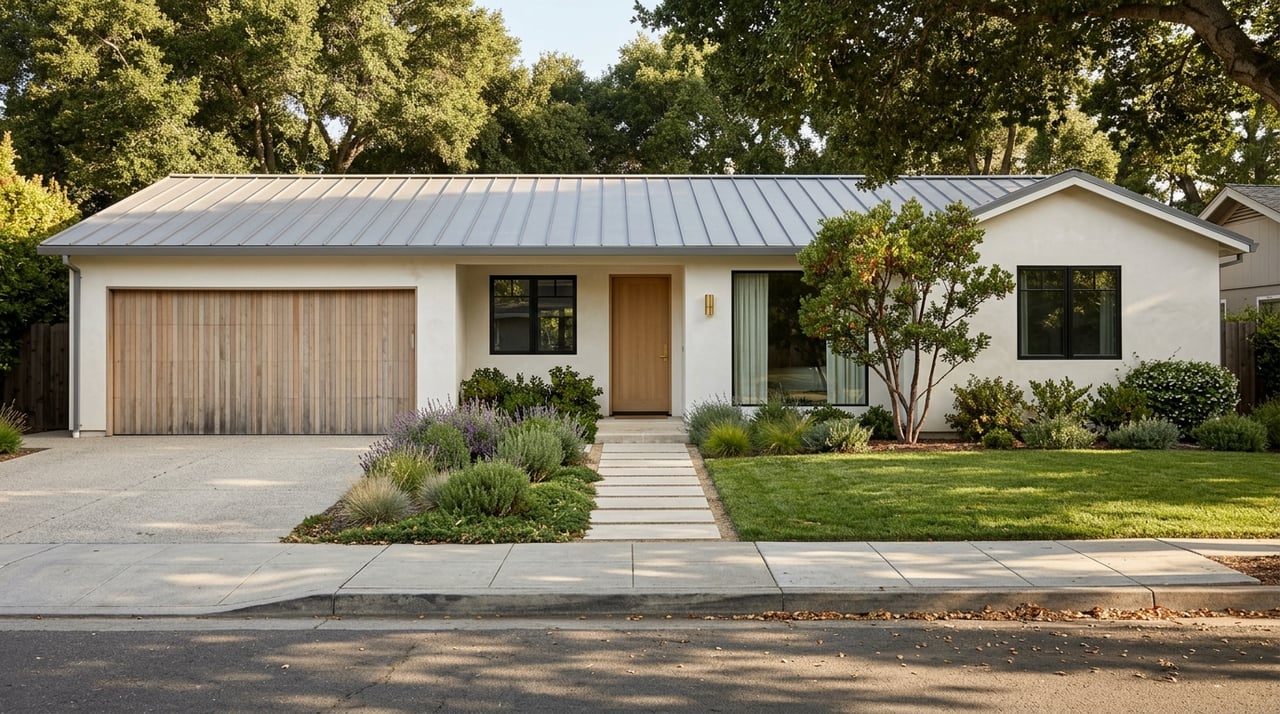
Everyday Living In Mountain View’s Single Family Streets
July 9, 2026
July 9, 2026
Wondering what day-to-day life really feels like on Mountain View’s single-family streets? For many buyers, the answer is not just about a house. It is about whether your routine feels easy, connected, and calm. In Mountain View, the city’s own planning, parks, and transportation materials point to a lifestyle built around quiet residential blocks, nearby outdoor space, and convenient access to downtown, transit, and errands. Let’s dive in.
Mountain View describes itself as a diverse city between the Santa Cruz Mountains and San Francisco Bay, with quiet neighborhoods and a historic downtown. That balance helps explain why the city often feels residential and established, even with a strong job base and regional connections.
For single-family homeowners, that setting matters. The city notes that most single-family homes are in the R1 district, and most streets serving these homes are public, city-maintained streets where street parking is permitted. The city’s single-family residential guide is also written for residential zoning districts without homeowners associations, which points to a city-managed neighborhood framework rather than an HOA-driven one.
One of the strongest lifestyle themes in Mountain View is how much of your routine can happen within a short radius. You can start on a quieter residential street, head out for a walk or bike ride, run errands, and still be back home quickly.
That kind of convenience is supported by the city’s broader layout. Mountain View places walkable historic downtown, the Castro Street dining district, and the downtown transit center near the middle of local activity, while also offering another useful commercial area around San Antonio.
If outdoor access is part of how you want to live, Mountain View gives you a lot to work with. The city’s parks division maintains 45 urban parks and 9.95 miles of bicycle and pedestrian trails, and its walking and bicycling information highlights accessible sidewalks, expanding bike lanes, and more than 10 miles of multi-use trails.
That means outdoor time can fit into an ordinary weekday, not just a planned weekend outing. Whether you like morning walks, after-work bike rides, or a quick playground stop, the city’s network supports regular use.
Several neighborhood-scale parks add practical value to daily life. Cuesta Park includes an off-leash dog area, playground, picnic tables, tennis, volleyball, fitness equipment, and a walking path.
Bubb Park also offers an off-leash dog area, playground, picnic tables, BBQ facilities, and a water-sand play feature in warm months. City parks are open from 6 a.m. to 30 minutes after sunset, which gives you flexibility for both early starts and evening routines.
When you want more open space, Shoreline at Mountain View changes the scale of your weekend. The city describes Shoreline as a 750-acre wildlife refuge and recreation area along San Francisco Bay, open daily from 6:30 a.m. until 30 minutes after sundown.
You can also reach Shoreline by running, walking, or biking via Stevens Creek Trail, Permanente Creek Trail, or Bay Trail. The city notes a dedicated dog park just outside Shoreline’s main gate, open from 6 a.m. to 30 minutes after sunset.
For another change of pace, Deer Hollow Farm offers a public educational setting centered on a historic working farm. Visitors can also explore 24 miles of trails in the surrounding Rancho San Antonio Open Space Preserve.
Mountain View’s transportation system supports more than driving alone. The city says it offers a diverse, high-quality network for pedestrians, bicycles, transit, and motor vehicles, with access to U.S. Route 101, State Highway 85, State Route 237, El Camino Real, and Central Expressway.
For homeowners, that creates options. You may still drive often, but the city’s mobility network can make certain trips easier, especially for downtown plans, commute connections, or local errands.
Accessible sidewalks, expanding bike lanes, and multi-use trails give you more ways to move through the city. That can make a real difference if you value short trips without always getting in the car.
It also supports a more flexible daily rhythm. A bike ride to a trail, a walk toward downtown, or a short outdoor errand can feel built into the area rather than forced.
Mountain View also offers free local shuttle services. The Mountain View Community Shuttle is free for everyone, with 50 stops, weekday service from 7 a.m. to 7 p.m., and weekend and holiday service from 10 a.m. to 6 p.m.
MVgo is also free and open to the public, with four weekday commute-hour routes connecting the Mountain View Transit Center to North Bayshore, East Whisman, San Antonio, and downtown Mountain View. The city also lists Caltrain, VTA light rail, VTA bus, and the Stanford Marguerite shuttle as part of the local transportation mix.
A big part of everyday living in Mountain View is having a real downtown nearby. Castro Street is the city’s oldest commercial corridor and a central destination for commercial, office, and retail activity.
The city says the 100- to 300-blocks are mostly restaurant and retail uses, with outdoor dining and public-use space woven into the corridor. For you, that can mean a downtown that feels useful on a regular basis, not just occasionally.
Downtown programming helps keep the area active through much of the year. The city notes that Music on Castro generally runs from April through October, Concerts on the Plaza runs June through September, and KidStock runs May through July.
These events add another layer to the local routine. Instead of planning every outing farther away, you may find that dining, seasonal events, and casual meetups are already close at hand.
The Sunday farmers market is another consistent part of Mountain View’s weekly rhythm. It runs year-round from 9 a.m. to 1 p.m. at the Downtown Mountain View Caltrain Station parking lot and features more than 70 growers and food vendors.
The city also notes easy Caltrain and light rail access, along with walkable proximity to downtown. For many buyers, that kind of recurring local activity says a lot about how a place feels week after week.
Beyond downtown, the San Antonio area gives Mountain View another useful activity center. San Antonio Village Center has evolved into a mixed-use node with apartments, a Safeway, retail, restaurants, a cinema, office space, and a hotel.
The city also notes a one-acre park there with a dog park, outdoor seating, and open grass. In June 2025, the city approved a Phase III project that adds ground-floor retail at San Antonio Road and California Street, reinforcing the area’s role as an everyday destination.
If you are considering a single-family home in Mountain View, the lifestyle case is fairly clear. The city’s own materials support a pattern of residential calm paired with practical access to parks, trails, transit, dining, and errands.
That does not mean every block feels identical, and it does not mean your routine will look the same in every part of the city. But if you value a home environment where outdoor space, public streets, downtown activity, and transportation options all play a role, Mountain View offers a compelling mix.
When you buy a home, you are also choosing your day-to-day rhythm. The details that shape that rhythm, like where you walk, how you run errands, and what feels easy on a Sunday morning, often matter as much as square footage.
That is especially true in a market where single-family homes can represent a major long-term decision. Understanding how Mountain View functions beyond the listing photos can help you make a more confident move.
If you want help evaluating Mountain View’s single-family neighborhoods through both a lifestyle and property lens, Nisha Sharma offers thoughtful, high-touch guidance for buyers and sellers across Silicon Valley.
Whether you are buying or selling a home. I'm here to help.
Get In Touch With Nisha To Learn More
Nisha Sharma
[email protected]
(650) 492-9263
CA DRE# 01746077
161 S. San Antonio Rd. Los Altos, CA 94022